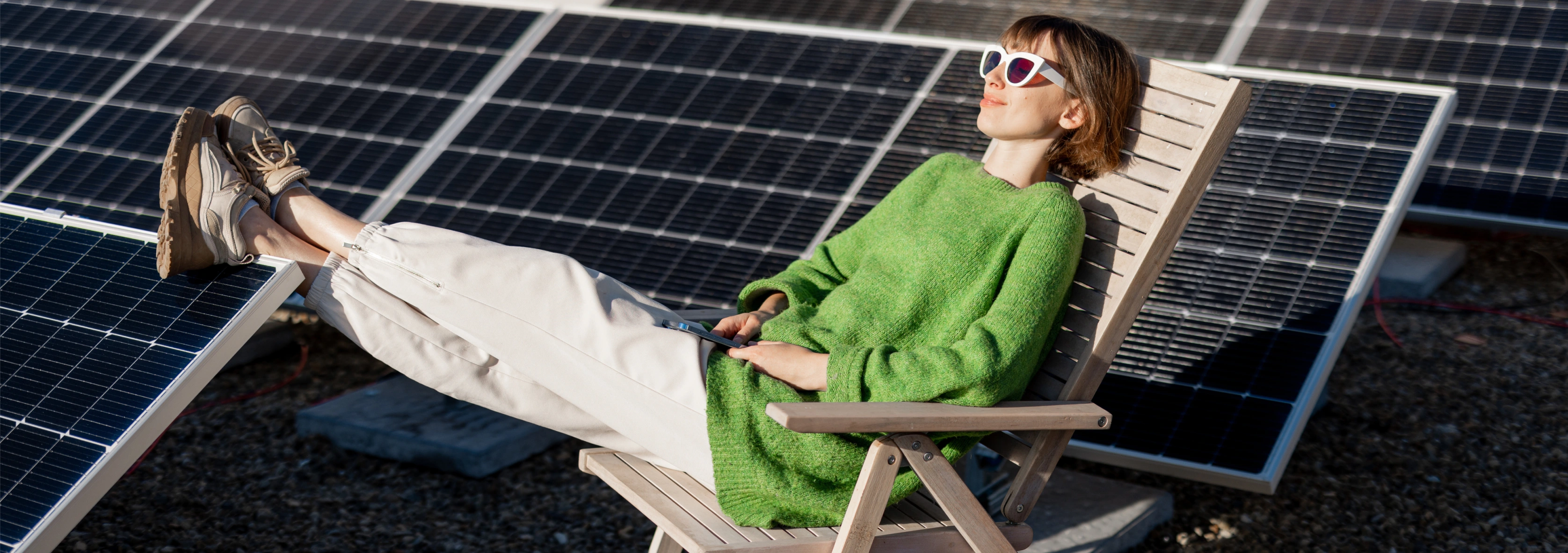
Adding a solar battery changes how your home uses the energy you generate. Instead of sending unused electricity back to the grid, you can store it and use it later – usually in the evening when your home needs it most.
The cost of a solar battery depends on how much energy you want to store and how your system is set up. There isn’t a single fixed price, but there are clear ranges that most UK homes fall into. We’ll break down what solar batteries cost, what affects the price and how to decide if one makes sense for your home.
What is a solar battery?
A solar battery is a unit that sits alongside your solar panels and stores any energy that you don’t use immediately in the home. Then when your solar panels aren’t producing enough power (like in the evenings or during low light weather), it’ll release the stored electricity to run things around your home. It’s a clever way to make the most of the energy you generate – so that nothing goes to waste.
How much does a solar battery cost in the UK?
For most UK homes, solar battery costs typically range from £1,500 to £10,000. With Hive, solar batteries start at £4,290 for a standard 5.32kWh solar battery and inverter.
Smaller batteries are designed to store a portion of your daytime generation, enough to cover some evening use. Larger batteries sit at the higher end of the range and can store more energy, giving you greater flexibility over when you use them.
In many cases, the battery is added alongside a solar panel system, but it can also be installed later. What’s included in the price can vary significantly, so it’s always worth checking whether installation and setup are part of the quote.
What affects the cost of a solar battery?
There are a few key factors that influence how much a solar battery will cost and they’re usually linked to how your home uses energy.
The biggest factor is capacity. This means how much electricity the battery can store. A larger capacity is able to store more energy – but can be more expensive upfront.
The type of battery and overall system design also play a big role. Some systems are designed to integrate more closely with your home energy setup, which can affect pricing. Installation can vary too, depending on whether the battery is being added to an existing system or installed alongside new panels.
It’s less about finding the cheapest option, and more about finding the right fit.
How much storage do you actually need?
This is where things become more specific to your home.
A smaller battery might suit you if you’re mainly looking to store excess energy for use later in the day. For example, using solar energy generated in the afternoon to power your home in the evening.
Larger households or those looking to reduce their reliance on the grid may benefit from a bigger system that can store more energy across a longer period.
That said, you’re not trying to store everything your panels generate. The aim is to store enough to reduce how much electricity you need to buy when solar isn’t available.
Is a solar battery worth the cost?
A solar battery will add to the upfront cost of your system, but it can change how much value you get from your solar panels over time.
Without a battery, any excess electricity you generate is exported to the grid. But with a battery, more of that energy stays in your home, ready to be used later. That usually means less reliance on grid electricity in the evenings when demand is higher. For many households, that’s where a battery starts to make a noticeable difference.
Plus if you add a battery to your Hive Solar installation, you’ll get 25% off any electricity you buy from the grid. All you need is a tariff from our friends at British Gas. Better yet, choose their Smart Export Guarantee tariff and you can sell any solar energy you don’t need back to them too – helping you maximise the value of your panels.
Can you add a battery to an existing solar system?
If you already have solar panels, adding a battery later is often possible. This can be a good option if you want to get more from the system you already have. Instead of exporting excess energy, you can start storing it and using it at a time that suits you.
It’s worth noting that adding a battery after installation can sometimes cost more than including one as part of your original solar setup. This is because additional components or adjustments may be needed to make everything work together.
Compatibility is important though. Some systems may need additional components to work smoothly with a battery. That’s why a proper assessment from an expert is usually the first step before adding one.
How long do solar batteries last?
Most solar batteries last around 5 to 15 years. Over time, their ability to hold charge gradually reduces, much like any rechargeable battery.
Manufacturers will usually provide warranties that give a clear idea of expected performance over time, often based on charge cycles or years in operation. All our Hive Solar setups come with a 10-year warranty as standard. So if anything does go wrong, you’re covered.
Are there any grants or schemes available for solar batteries?
As of right now, support for solar batteries on their own is limited. But there are still a few ways to make the overall cost more manageable. In fact, if you install a battery alongside a new solar panel system, you’ll usually benefit from 0% VAT across the whole setup. That can make a noticeable difference compared to adding a battery later on.
There’s also the Smart Export Guarantee (SEG), which pays you for any excess electricity you send back to the grid. While it doesn’t directly fund a battery, it can help improve the overall value of your solar system over time.
As with most schemes, what’s available can change, so it’s worth checking what applies to your home before getting started.
Let us find the right solar battery for your home
Our trusted installers design solar and battery systems around real homes, helping you make better use of the energy you generate every day.
With the right setup, a solar battery quietly stores energy when you don’t need it and releases it when you do – so your home runs more efficiently without you having to think about it. The Hive app makes it easy to see how your energy is being generated, stored and used. So you get a clearer picture of how everything is working together.